Mobile app or website: which one first when you launch a product?
Start with a website if the product first needs explaining, testing with a few people and being found on Google. Move to an app when daily use, notifications or phone features justify it. Launching both at once often scatters energy.
The real question: where does the use happen?
An app is justified when people come back often, need notifications, or use the phone (camera, location, payment). Otherwise a well-made website is enough, faster to launch and indexed by Google.
When to start with a site
- the product needs explaining before it's used;
- you're looking for first users or a waitlist;
- you want to learn what people ask for;
- the budget calls for a quick first milestone.
When the app comes first
- use is daily or even several times a day;
- the product relies on the camera, location or notifications;
- the mobile experience is the product itself.
A first version, not every feature
The first version should deliver one promise. The rest waits until you see what real users do.
What this looks like in practice
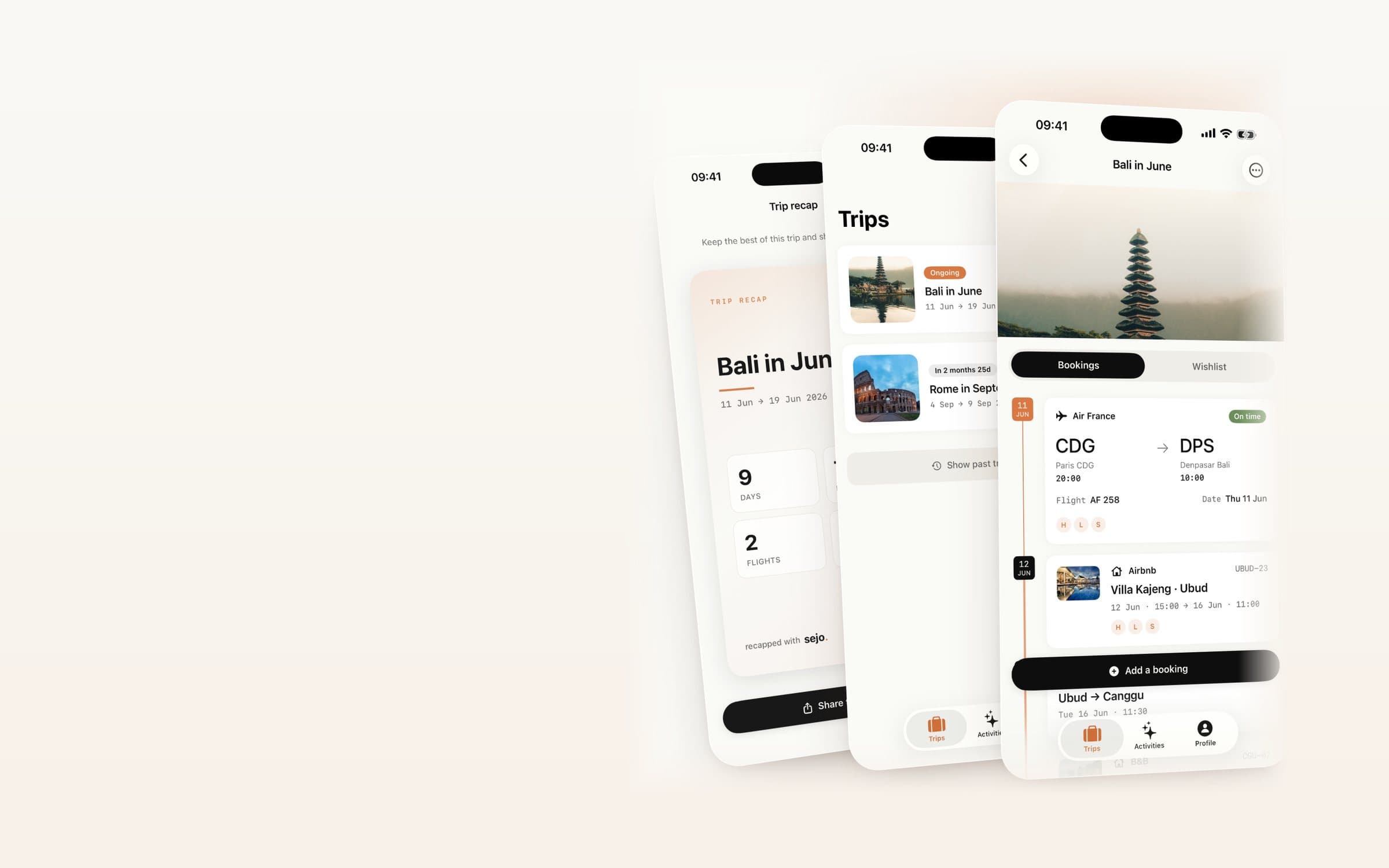
For sejo, a group travel app, we carried the project end to end: brand strategy, product design, the native iOS app and the website, through to the App Store release. Result: 20 users in launch week, testers included. For Darlink, one design system covers a web portal, an app and a marketing site.
And the website?
Even when the app exists, the website is the page Google and AI assistants read. It has to explain the product plainly. See mobile app design and development and custom web development.
Frequently asked questions
- Can I launch an app without a website?
- Yes, but you lose visibility on Google and the page that explains the app. A simple page is enough to start.
- Should I build iOS and Android at the same time?
- Not necessarily. Starting on one platform lets you validate faster. The choice depends on your audience.
- How long does a first version take?
- It depends on the scope. The timeline is set during scoping, once the first version is defined.